
⌁
Data Science
Turning data into intelligence, insights, predictions, and better decisions.
- Data engineering and pipelines
- Analytics and visualisation
- Forecasting and modelling

D-SAi is a technology company working across three disciplines that most firms treat separately: data science, artificial intelligence, and software engineering. We think the interesting problems live exactly where those three meet.
D-SAi grew out of four years of building software for real businesses. Long enough to ship a lot of working systems, and long enough to notice a pattern that kept repeating.
The software was rarely the hard part. Again and again the same thing happened: a platform would go live, work exactly as specified, and still fail to change very much. The data feeding it was fragmented. Decisions were still being made on instinct and month-old spreadsheets. The application was a beautiful surface on top of an organisation that could not see itself clearly.
That pushed the work toward data: engineering, analytics, and then data science. Understanding not just how to move information around, but how to make it mean something. Around the same time, AI stopped being a research topic and started being something you could genuinely put into production. The interesting question changed from can this work? to will this survive real use?
Most of the answers turned out to be no. Demos are easy. Systems that hold up on a Tuesday afternoon when the input is malformed and someone needs an answer now are not. That gap, between what AI can demonstrate and what a business can rely on, is why D-SAi exists.
So the company was built deliberately across all three: the software engineering to build things properly, the data foundation to make them intelligent, and the AI judgement to know when intelligence genuinely helps and when it is an expensive distraction. Not three service lines sold separately. One way of solving problems.
We are deliberately small and deliberately broad. The same people who model your data are the ones who build the software it runs in, which removes the handoffs where most projects quietly lose their value.
Turning data into intelligence, insights, predictions, and better decisions.
Building practical AI systems, automation, agents, and intelligent workflows.
Building scalable, reliable, modern software products and platforms.
Not values on a wall. These are the arguments we have internally when deciding what to build and what to talk a client out of.
Every system should trace back to a decision someone makes or a cost someone carries. If we cannot name it, we should not be building it.
A feature fixes a symptom. Look at the whole flow (data, process, people, software) and the real fix is usually somewhere else entirely.
More dashboards is not more insight. Data earns its cost when it changes what somebody does on a Monday morning.
Judge AI on whether it survives production, not on how well it demos. Sometimes the honest answer is that a script would be better.
Optimise for the second year, not the first launch. Tests, boundaries, and documentation are what make change affordable later.
The company did not start with a strategy deck. It evolved by following the problems that kept turning up in the work.
Years of hands-on software engineering: web applications, platforms, and integrations for real businesses with real constraints. This is where the engineering discipline came from: testing, architecture, and the hard-won respect for what happens after launch.
Working software kept running into unreliable data. That pulled the practice into data engineering, analytics, and eventually data science, building the connected foundations that let an organisation see itself clearly.
As AI became genuinely deployable, the work shifted to a harder question: which applications actually survive production? Continuous experimentation, honest evaluation, and a lot of ideas discarded for good reasons.
The three strands formalised into one company, bringing data, AI, and software together to build intelligent solutions and products that solve real-world business problems.
Today the work is whole systems: connected data, AI where it genuinely helps, and software that puts both in front of the people doing the work, including D-SAi AI Studio, our own multi-model AI workspace.
A small, senior team that stays close to the code. You work with the people who build the thing, not an account layer in front of them.
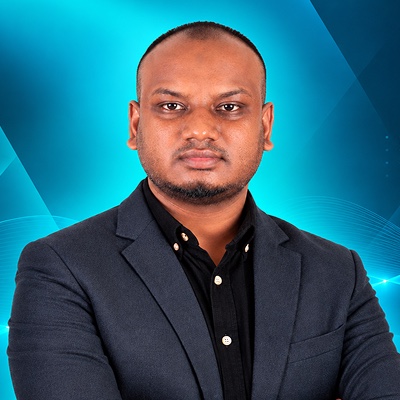
AI Product Engineer
Md Alqurayish Sharkar is the Founder of D-SAi, a technology company bringing together Data Science, Artificial Intelligence, and Software Engineering to build intelligent solutions and products that solve real-world business problems.
A short list, deliberately. We would rather name one partner we genuinely work with than fill a page with logos.

Practical IT training for entry and professional development, with personal support and an Arabic learning bridge if technical language becomes a hurdle.
Let's build the system that solves it.